Falling through a hole in the ground, gravity accelerates the body to a top speed of 18000 mph. A moment at Zero G at the center of the earth, then – chute ascentive – keep falling upwards, or away from the inner core, using the momentum of the original fall, until gravity increases again, slowing the body to a halt as it passes through the mantle, breaking through the earth’s crust at the antipode: the other side of the globe. The fall would take 40 minutes.
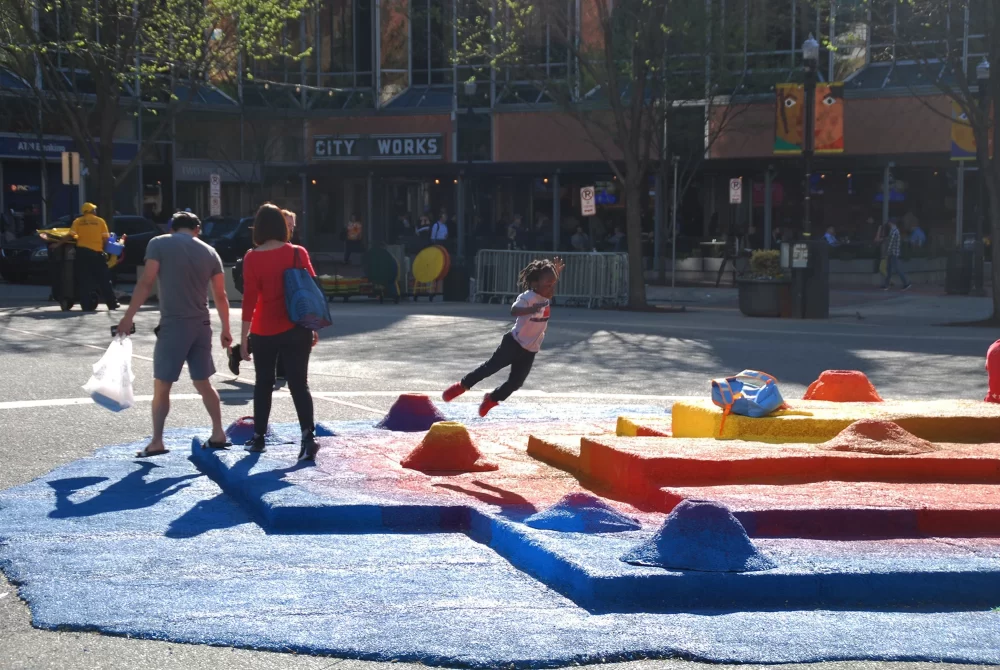
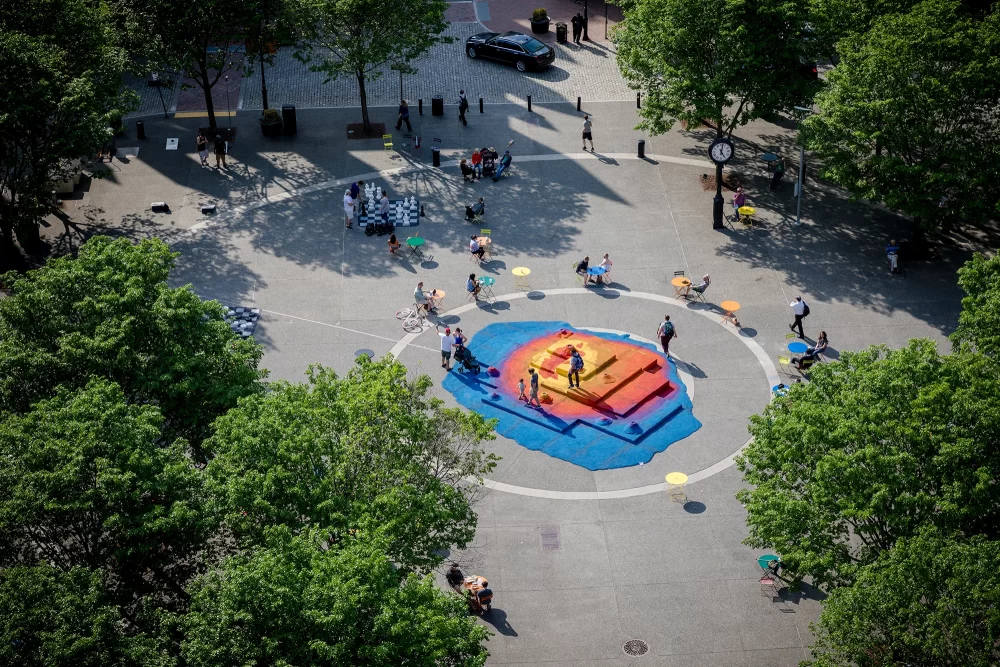
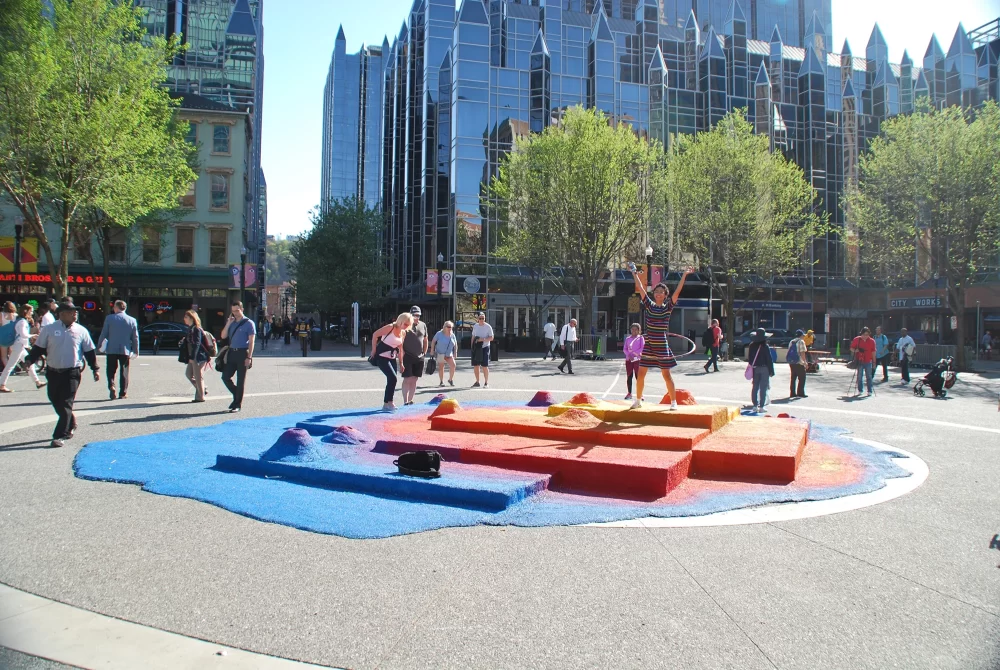
Forty minutes from Market Square in Pittsburgh, falling through the center of the Earth, we reach the South Indian Ocean. The nearest landmass is a remote island, occupied primarily by seals, albatross, penguins, a small group of French scientists, and a herd of miniature cattle. We propose to bring Ile Amsterdam to Pittsburgh by constructing a temporary landmass in Market Square, an abstracted, scaled down version of this isolated place on the other side of the world.
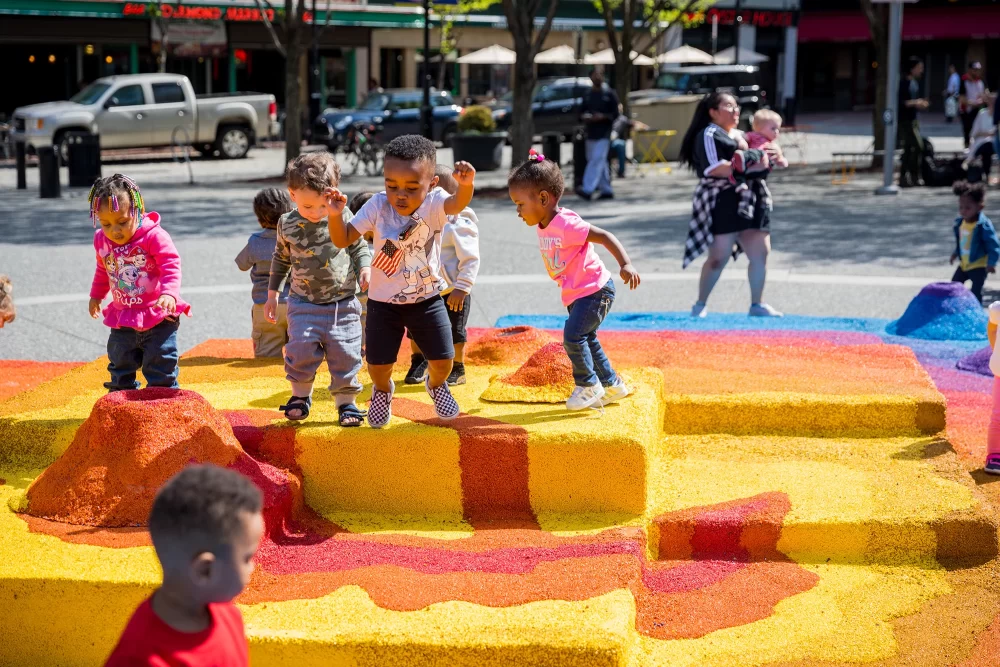
The objective is twofold. First, creating an inhabitable topology in Market Square to provide a setting for cultural activities such as concerts, picnics, lounging, or a play. The second, is educational. By way of of connecting Pittsburgh to an island in the middle of the Indian Ocean we reinforce a sense of global consciousness, providing an opportunity for the public to learn, literally, about the most remote place on earth – its unique flora and fauna, its volcanic activity, its natural history, as well as the scientists who study it, but also its history as colony and conquest. We propose to research Amsterdam Island, and to create a communication system between the citizens of Pittsburgh and its natural and cultural history, as well the current inhabitants who conduct scientific research on the island each year.
In terms of form and structure, the proposal is to create a coffered timber structure, which will then be wrapped in a weather-resistant membrane, upon which large outdoor cushions will be tiled. Each cushion will be unique in shape and printed with an image taken from from the island. The images, along with accompanying text, will provide information about the island. The overall structure will appear as a patchwork of upholstered forms. At the end of its time in Market Square, the piece will be disassembled, and cushions will be given out to the inhabitants of Pittsburgh, who will keep these relics of Ile Amsterdam in their homes.
By using the reusable cushion, a consumer good, as its basic building block, the project expands and critiques notions of “green" architecture. As a visual concept, the installation will serve as a symbolic gesture of sustainability and a poetic reminder that the buildings and temporary pavilions we construct are impermanent: frozen moments in an ongoing flow of products and materials. Outside of its environmental considerations, Amsterdam Island dramatically re-contextualizes consumer products - symbols of mass consumption and standardization– into alternative gestures of hope while contributing a global understanding of the planet.